
August 4, 2026
From a Show House Wine Cellar to a National Design Brand: How Michelle Murphy Built DEMI RYAN
A Chapel Hill designer on trust, timing, and why the best homes never look staged.
In this episode: Michelle Murphy of DEMI RYAN traces her path from an HGTV show house in Irvington on Hudson to a full service luxury design firm with clients across the country, explains the story behind her company's name, and makes the case for why more homeowners should consider selling, and buying, fully furnished. Listen to the full episode on Apple Podcasts, Spotify, and YouTube.
If you've ever walked into a beautifully staged house and felt nothing, and then walked into someone's actual home and felt everything, you already understand what Michelle Murphy has built her career on. It isn't the fabric or the scale or the perfectly placed bowl of apples on the counter, although there's plenty of that too. It's the difference between a house that looks good in a photo and one that feels like somebody lives there.
In this episode of Best of Raleigh, host Gretchen Coley sits down with Michelle Murphy, founder of DEMI RYAN, a full service luxury interior design firm based in Chapel Hill, for a conversation about building a design career from scratch, the story behind her company's name, and why she thinks fully furnished homes are the future of real estate in the Triangle.
From an Art Gallery in Cherry Hill to a Show House in Manhattan
Murphy's path to design started long before she picked up a swatch book. Her mother ran a nonprofit art gallery in Cherry Hill, New Jersey, and Murphy grew up stuffing envelopes and modeling for the artists her mother represented. She wanted to go to art school outright, but her entrepreneur father insisted on two years of business school first. She transferred to Moore College of Art & Design in Philadelphia, where a rotation through metalsmithing, woodshop, ceramics, and painting kept pulling her back to one thing: interior design, and the way it let her combine fabric, texture, and scale into something new.
Her first real break came almost by accident. Working as a gallery director in Manhattan, she lent artwork to two London designers for an HGTV show house, Villa Loera, the restored former home of Madam C.J. Walker in Irvington on Hudson. A conversation with the woman running the project turned into an offer: design a room. Murphy built a wine cellar, drawing on her father's business in wine, then a small gallery space, drawing on her mother's. It was enough to launch a career that most designers spend a decade building toward.
The Story Behind the Name DEMI RYAN
Ask Murphy about her company name and she'll tell you it's a family equation. Her firm was originally called MPM Interiors in Manhattan, until a fabric mix-up with another designer of the same initials made the name unworkable. Borrowing a page from her entrepreneur father, who liked to build company names out of the people behind them, Murphy combined her husband Dennis and her own name, Michelle, into Demi, then added her son Ryan. DEMI RYAN was born, and unlike a set of initials nobody remembers, it's a name that sticks.
Why Chapel Hill, After 9/11
Murphy had a thriving design business in Manhattan when September 11 changed everything. Her husband worked for UBS, her father-in-law's building was taken over by FEMA for use as a morgue, and staying in the city no longer felt possible. Her brother had already relocated to the Triangle for Duke Med and never left. In November of 2001, Murphy and her family moved to Chapel Hill, a place she admits doesn't obviously fit her more urban personality, but one she's grown to love completely, apart from wishing for a bit more shopping.
No Signature Style, on Purpose
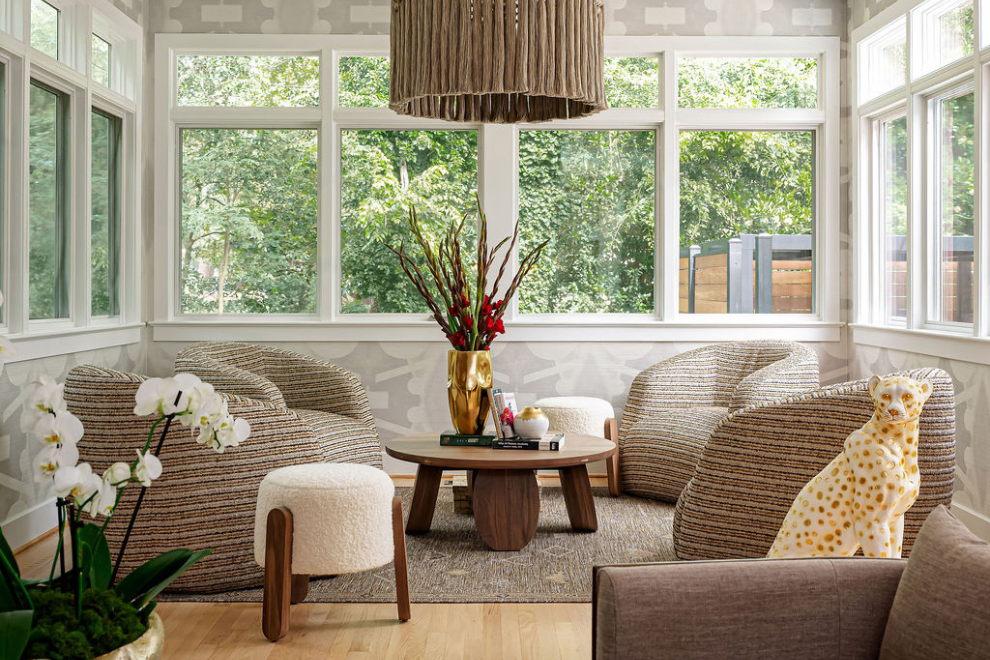
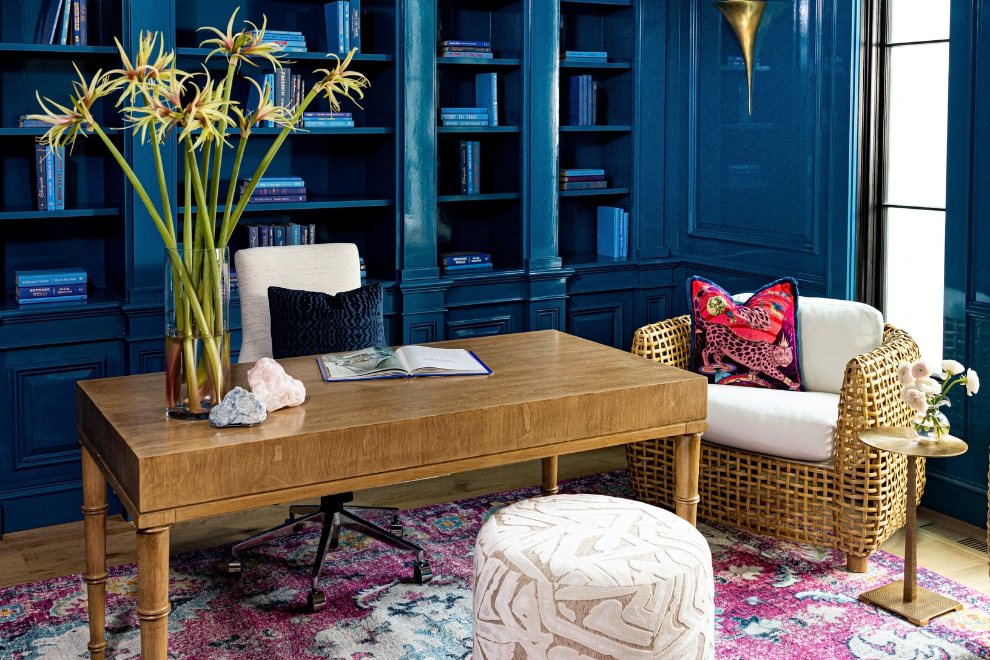
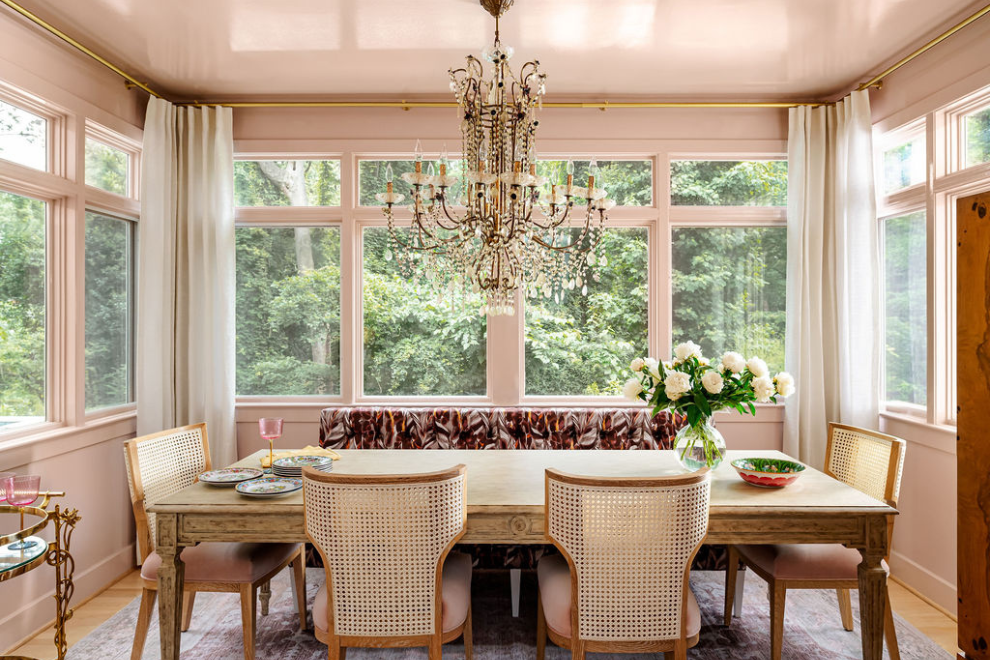
Look through Murphy's portfolio, published in HGTV Magazine, Cottages and Bungalows, and Southern Home this year alone, and you won't find a house that looks like the one before it. That's deliberate. Murphy refuses to let one design genre define her work, choosing instead to layer different styles into something specific to each client. It's part of why her clients keep coming back for house after house: one family in Michigan has hired her for four houses in two years as they've relocated for work. She even retires fabrics after using them once, writing the client's name on the back, so no two DEMI RYAN homes ever feel interchangeable.
The Furniture Capital Advantage
North Carolina's status as the furniture capital of the world isn't just a talking point for Murphy, it's a working advantage. A recent tour of Universal Furniture and Theodore Alexander showed Gretchen craftspeople who had spent 40 years hand-matching fabric grain across a single chair. For Murphy, being based in state means lower shipping costs at a moment when freight is expensive everywhere, faster turnaround when a client needs something by a deadline, and easier fixes when something arrives damaged. It's a level of access to manufacturing that designers in most other states simply don't have.
Trust Is the Real Product
When Murphy talks about what separates a good client relationship from a great one, the word she keeps returning to is trust. She recalled pushing a Virginia client toward a bold Portartelio wallpaper for their foyer against their initial objections. They eventually agreed, and it became one of their favorite rooms in the house. Her advice to anyone hiring a designer: find someone whose portfolio you connect with, even if it doesn't show the exact style you have in mind, because a good designer can adapt. On the difficult subject of budget, she opens every project with a simple question: good, better, or best, which does more to set expectations than any dollar figure could.
Are Fully Furnished Homes the Future of Raleigh Real Estate?
Perhaps the most provocative idea Murphy raised is one that speaks directly to The Coley Group's world: nearly all of her clients sell their homes fully furnished, and she thinks that should become far more common. Beach houses have worked this way for years, she pointed out, because buyers want to walk in and start living immediately rather than spending two years hunting down every tchotchke. With the time value of money what it is, and decision fatigue what it is, Murphy argues that curated, swappable furnishings, the kind buyers see walking into homes in Aspen or the Hamptons, could reshape how new construction sells in a market like Raleigh's, where DEMI RYAN and the Coley Group are increasingly circling the same conversation.
DEMI RYAN at a Glance
- Founded by Michelle Murphy, originally as MPM Interiors in Manhattan
- Relocated to Chapel Hill in November 2001
- Full service luxury interior design, working on residential and commercial projects nationwide
- Featured in HGTV Magazine, Cottages and Bungalows, and Southern Home
- See the full DEMI RYAN partner profile on Best of Raleigh
- Website: demiryan.com | Instagram: @demiryanhome
Rapid Fire with Michelle Murphy
- Most memorable room she's ever designed: A kitchen a client asked her to make look like it belonged to a Viking chef.
- Hardest style to pull off, luxe, layered, or edgy: Edgy.
- Best piece of advice she's ever received: Trust yourself and trust your gut.
- Color she'll never get tired of: Black.
- Biggest design trend she wishes would go away: Oversized cloud sofas.
- Favorite way to spend a Sunday in Chapel Hill: In bed, sleeping.
Frequently Asked Questions
What areas does DEMI RYAN serve? DEMI RYAN is based in Chapel Hill and works across the Triangle, including Raleigh, Durham, and Cary, in addition to projects around the country for relocating clients.
How much does it cost to hire an interior designer? Murphy says her firm intentionally keeps pricing accessible and works within a range of budgets, starting conversations with a good, better, or best framework rather than a fixed number. She's furnished entire homes, including light fixtures, on budgets as tight as $35,000.
Do interior designers actually save clients money? Murphy argues yes, largely through trade pricing on furniture, fabric, and wallpaper that isn't available to the public, plus avoiding the costly scale and spacing mistakes many homeowners make on their own.
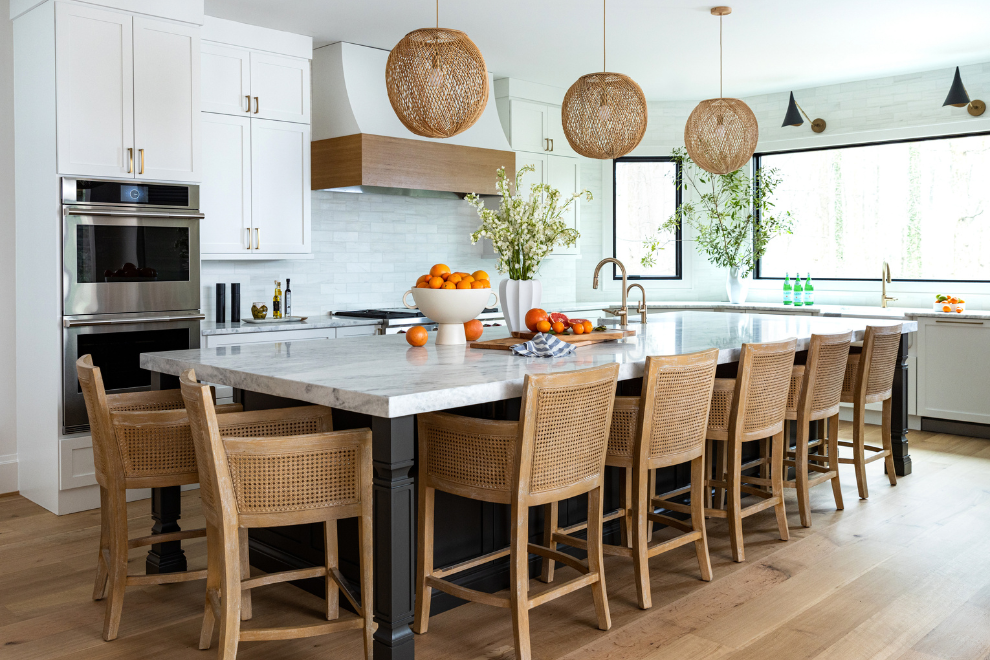
Will white kitchens ever go out of style? According to Murphy, no. She considers white kitchens timeless, especially when warmed with wood tones or paired with a detail like a white oak ceiling.
Why It Matters
Murphy's story is a reminder that the houses people remember aren't the ones staged for a photograph, they're the ones with a great-grandfather's handmade telephone table on a side table, or a wallpaper a client was scared to try until they weren't. As Raleigh keeps growing and new construction keeps rising across the Triangle, that distinction between a house and a home is only going to matter more. Whether it's a bowl of Whole Foods apples that somehow become the best apples a family has ever tasted, or a fully furnished home a buyer can walk into and simply start living in, Murphy's twenty-plus years in the Triangle make one thing clear: the right design, like the right home, should feel like it was made for you because it was.
Related listening: Interior Design That Feels Personal, Approachable, and Timeless | Best of Raleigh Episode 83
Want more conversations with the people shaping Raleigh? Subscribe to The Best of Raleigh on Apple Podcasts, Spotify, and YouTube. New episodes twice a month, featuring the people and places that make this city one of the best places in the country to live, work, and explore. For daily local finds, hidden gems, and things to do around the Triangle, follow @thebestofraleigh on Instagram.